
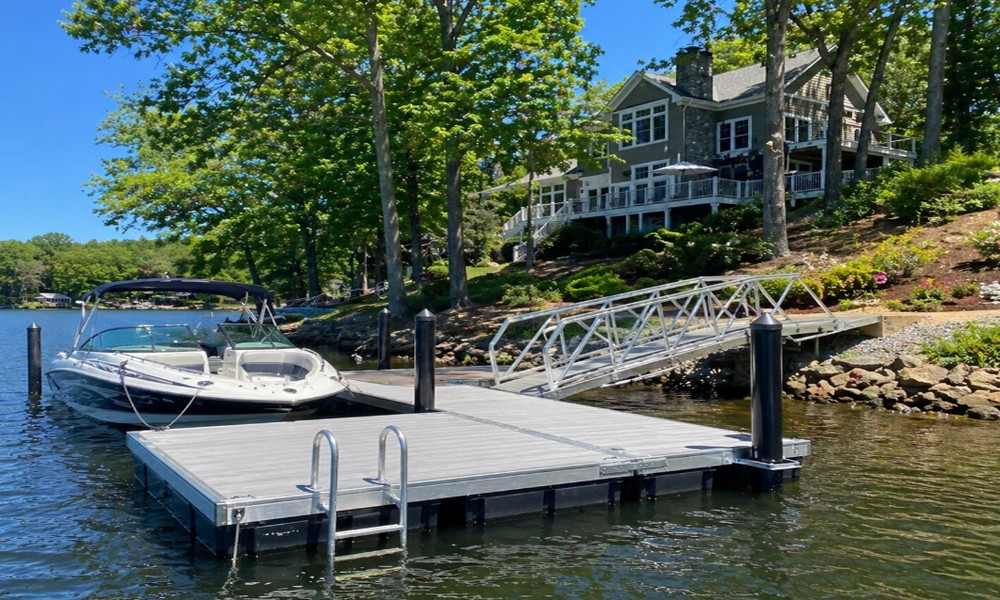
A floating dock for residential use seems simple enough initially. It’s an ocean shoreline, a dock perhaps a boat that is tied up at the end and that’s kind of the image. The real question is. How will the dock remain stable in the event of rising water? What kind of material will stand up the best? Do you need permits? What is the process for anchoring? How much will the entire project cost after the simple assumptions are gone?
When you visit Supreme Floating Docks, this is typically where the work is done. A floating dock installed for residential purposes isn’t only about placing an artificial platform over the water. It’s about coordinating the dock with your shoreline and water’s depth as well as the boat usage and the speed of the dock. Floating docks are well-liked because they fluctuate in response to changes in water levels and are perfect for rivers, lakes or tidal shorelines and other waterways where levels don’t stay constant.
A great dock should be effortless to use. Stable. Safe. It is there. This is usually the result of solid planning before the first part reaches the water. A floating dock that is designed for residential use will work best when the location drives the design, not the reverse.
Important Takeaways
- A floating dock for residential use works best in areas where the water levels fluctuate.
- The location of the dock is as important than the dock.
- Floating dock permits typically depend on the shoreline rules of the locale as well as floodplain rules. occasionally federal review.
- Floating dock materials alter your maintenance burden, duration and your budget.
- Aluminium floating docks as well as floating docks with modular design are extremely popular and have a good reason for that.
- Anchoring of the dock on the floating surface determines whether the dock is in place throughout the time.
- Homes with docks on the waterfront must be planned for accessibility, safety and wear in the future.
- Supreme Floating Docks builds around the long-term usage, not just the day-one look.
What is the term used to describe a residential float Dock Installation?
It’s the process of making plans and anchoring, assembling and installing an individual dock system that is designed to be used at home.
A floating dock installed for residential purposes covers the entire process from the initial review of the site to the final installation. The task typically includes shoreline reviews and design of the floating dock materials anchoring, assembly and final adjustments to ensure that the dock is in harmony in harmony with the property rather than trying to block it.
A typical project typically comprises:
- Site visit
- water depth review
- floating dock design planning
- material selection
- anchoring plan for anchoring
- shoreline connection
- Launch and assembly
- final position and safety checks
This is the reason the floating dock installer is more than just delivering sections and then join them. A home-based floating dock needs the ability to remain functional through fluctuating levels, boat movements, weather conditions, and regular family activity. A floating dock that is designed for residential use is all about creating an effective system, not just the deck that is floating over water.
Why Should You Choose A Residential Floating Dock instead of a fixed Dock?
Floating docks move with water and can often manage changing levels more effectively.
A floating dock that is used for residential purposes works best when levels of water rise and fall throughout the year. Since the dock floats the boarding level stays consistent than fixed docks in different water conditions. Floating docks are usually selected for this reason.
This is often the case for:
- Lakefront homes
- homes along the riverfront
- tidal properties
- waterfronts that have seasonal shifts
- backyard floating dock projects that require ease of access is crucial.
A dock fixed is the ideal solution for some locations. I think this part merits mentioning. However floating docks for residential use generally makes more sense in the case of shifting water, less saline water conditions at the bottom, or a requirement for a simpler expansion in the future.
What Should a Construction Contractor for a Floating Dock Check First?
Shoreline and depth of the water and the motion of the land.
A floating dock contractor must begin by locating the dock before the dock’s shape is fixed into.
The initial review should be focused on:
- water depth
- seasonal changes to the water
- exposure to waves
- Present
- exposure to wind
- Shoreline slope
- Conditions at the bottom
- Boat size and usage
- Access to the shore
These factors determine how a floating dock system is constructed. A tranquil pond or open and windy lake edges are not the same outcome. A floating dock contractor who does not ask these questions is making guesses, and guessing about the water’s edge is usually costly in the future.
This is a reason why residential floating dock installations must begin with a review of the field rather than shopping in a catalog.
What kind of floating dock materials work best for homeowners?
The most effective material is determined by the goals of maintenance as well as the water conditions and your budget.
Straight answer. There isn’t a single ideal material for each shoreline. The best choice is contingent on how you intend to use the dock as well as the amount of maintenance you’d like.
The most current dock material guides provide the most commonly used floating dock materials, including HDPE, wood, aluminum PVC or composites and concrete, each having different trade-offs in terms of durability and maintenance. PVC and other non-porous substances are resistant to swelling, rot, shattering, and mold since they don’t absorb water in the same way that organic materials do.
Common floating dock materials include:
- aluminum
- wood
- composite decking
- HDPE is afloater
- PVC-style surfaces
- concrete is used in some of the heavier systems.
Your material choice affects:
- floating dock cost
- Dock weight
- repair needs
- Surface feel
- heat underfoot
- long-term maintenance
Most homeowners start by focusing on color or appearance. This is not unusual. However, the installation of a floating dock for residential purposes generally goes more smoothly when you consider the load first. The dock will be outside in damp and changing weather conditions. Maintaining it is crucial.
Are aluminum floating docks a Good Idea?
Yes, especially when weight and resistance to corrosion matter.
In many homes floating docks made of aluminum are an ideal option.
The current dock system guidelines say aluminum is a lightweight material that resists corrosion and is particularly suited for exposure to saltwater. Aluminum is a popular choice for a variety of floating docks since the framing is less heavy while still able to withstand humid conditions.
Why do homeowners frequently select aluminum floating docks:
- Framing that is lighter
- excellent resistance to corrosion
- cleaner long-term look
- Modular expansion that is easier to build
- strong durability
This doesn’t mean that aluminum isn’t in need of attention. There is no dock that has this kind of luck. Maintenance guidelines for floating systems continue to require regular inspections of hardware, connections, and anchoring.
For a lot of owners, however floating docks for residential use using aluminum framing is the best option as it provides durability and maintenance costs quite well.
What is Modular Docks? What are floating Docks?
These dock systems are constructed out of sections that join together.
Modular floating docks can be built of separate dock sections that are connected to the larger layout.
The structure is what makes them suitable for homeowners who need the flexibility. Floating dock guides define modular docks as sectional docks that are easy to build or reconfigure as time passes.
Modular floating docks aid in:
- Phased expansion
- simpler replacement of one section
- simpler transport
- easier layout changes
- custom-designed residential docks for your home with the future in the back of your
This is the reason that floating docks in residential areas generally focuses on modular systems. The homeowner may begin with a simple platform, later add a side area, PWC port, kayak launch, or even a more extensive walkways later. The flexibility can be beneficial particularly when the initial plan changes after two years in the water.
What is the Process of Floating Dock Anchoring Work?
The dock remains in place by means of shoreline connections and piles or anchors made of water.
Anchoring the dock floating keeps floating docks from slipping, while still allowing water level moving.
The anchoring guideline for modular systems describe that pilings, shoreline anchors as well as cable system are the most common methods to keep floating docks in their place. Shoreline anchoring connects the dock with anchors that are buried or on land, whereas water-based anchors or piles aid in keeping the dock’s their position and reduce drift when there is a change in wind or waters.
Common floating dock anchoring methods include:
- Anchors for shorelines
- Cable anchors
- pilings
- pile guides
- Chain anchors
- anchor plates
This is the part that determines how solid your dock appears. An anchoring plan that is floating and stable will allow the dock to be able to move upwards and downwards, while making sure the structure stays in line with the shore. A weak anchoring strategy is often the cause of more wear, twisting, and more stress.
This is the reason the reason why residential floating docks requires a specific anchoring strategy for each site that is not a standard-fits-all approach.
Do Homeowners Need Floating Dock Permits?
Yes, often because floodplain and shoreline rules differ according to the locale.
Many homeowners require floating dock permits before construction begins.
The rules for permits are determined by what body of water is being used, as well as the owner of the shoreline and the federal or local agency that is involved. FEMA declares that permits are required prior to construction or development commences within a Special Flood Hazard Zone. U.S. Army Corps pages for certain lakes also mention that permits for shoreline use are required for any private floating facility within the waters. The Corps’s guidance also states that the construction of a dock usually requires laws, rules and procedures that the user must know before beginning work.
Permits for floating docks can include:
- local building department review
- floodplain permit review
- homeowner association approbation of the homeowner association
- Shoreline management approval for shoreline management
- U.S. Army Corps review regarding certain waters
This is a slow process. I’m aware of that. But permit issues are one of the fastest methods to make a private dock installation into a nightmare. A floating dock that is residential must begin with a permit application and not stop there.
What’s The Dock Building Process Look Like?
It typically begins with plan and is completed with aligning on the water.
The dock construction process is carried out in stages, and every step has an impact on the next.
A typical residential development typically is arranged in this manner:
- Site visit
- Review of the shoreline and waterways
- Floating dock design
- Anchoring and material choices
- Permit review
- Fabrication or placing an order
- Waterfront dock installation
- Final adjustments and check
The reason why this purchase is important is straightforward. If you purchase prior to understanding the site it could be necessary to revision in the future. A shoreline that has more of a drop that is steeper or a rougher wave action or a more difficult access path might require a different layout than you anticipated.
This is the reason why a floating docks in residential areas work best when the designer is planning from the water backwards and not using the catalogue forward.
How Much Is Floating Dock cost?
Costs vary based on the size of the anchoring device, materials permits, anchoring difficulties.
The cost of floating docks is shaped by the entire project, not just by length of the dock.
The primary cost drivers generally consist of:
- The size of the dock
- Layout form
- floating dock materials
- Method of anchoring
- Access to shoreline difficult
- permit needs
- Delivery and labor
- ramp or gangway
- accessories like bumpers, cleats or steps
A home-based floating dock that is suitable for use by a small family could cost a lot in one direction. Boat docks for bigger vessels, more rough waters or a heavier anchoring could be in a different price range.
This is the reason why the cost of installing a floating dock for residential homes estimates must always be tied back to the place. Two docks that appear similar in size might be installed at a different cost due to the fact that one waterfront is easy and the other one isn’t.
How do you build a floating Dock That is Usable For A Long Time?
You can match the system with the site and plan maintenance in the early stages.
Long-term dock performance begins by choosing the right dock design, the appropriate materials, and the correct anchoring.
The most common mistake is to believe that the first season’s performance is the only way to tell the story. This is not the case. Docks must be able to withstand the elements of wind, fluctuating levels load, sun and wear and tear over time. Maintenance guidelines for floating docks suggests periodic inspections of hardware connection, hinge point and anchoring systems. This is in addition to clean-up and checks following changes in the weather.
A dock typically lasts longer if you plan for:
- Hardware inspection
- anchor checks
- Review of seasonal movements
- Surface cleaning
- Inspection of floats
- Replacement for accessory
- shoreline connection checks
The majority of this is common sense that is great. Simple habits are usually better than emergencies.
What does Floating Dock Maintenance Involve?
It is about checking the anchoring, hardware, floats and conditions of the surface on a regular basis.
Maintenance of the floating dock should be constant and not erratic.
Current maintenance guides recommend dock owners must inspect bolts and hinges, nuts couplers, anchoring systems on a regular basis, also cleaning their surfaces and checking for the accumulation of debris or seasonal changes in the cable slack.
A practical floating dock maintenance list includes:
- Check bolts and fasteners.
- Check hinges and couplers, as well as hinges.
- examine the alignment of cables or piles
- clean decking surface
- Be on the lookout for damage to floats
- Examine the cleats and bumpers
- check gangway alignment
This is important because gear for waterfront wears out in quiet ways. You might not even notice the change until the dock is rubbing incorrectly, slipping a bit or moving more than it needs to. The installation of a floating dock for residential use should be done with a mindset of maintenance right from the beginning.
Should homeowners try DIY floating Dock Installation?
Only if the area is easy to access and the permit route is clearly defined.
Certain small-scale systems can be into a DIY construction, but the majority of waterfront properties need the services of a professional floating dock construction company.
How do you build floating docks is just one of the questions that people look up when they need to reduce the cost of labor. It’s logical. But floating docks can earn an income when the location becomes complex.
Professional help is more appropriate in the following situations:
- water levels shift a lot
- Anchoring can be a bit complicated.
- Permits aren’t clear
- The dock is able to hold larger vessels
- Access to the shoreline is a challenge
- the design is made to order
- Stability and safety matter more than first price
A private dock on a peaceful, straightforward shoreline could allow for owners to be more involved. A site that is more difficult to build requires more planning. A floating dock that is designed for residential use will work better if the person who is building it is aware of the shoreline, permits limitations and anchoring loads not only assembly procedures.
What should homeowners ask before hiring a floating Dock Contractor?
Find out about the site’s suitability permits, anchoring materials and maintenance.
Be sure to ask the questions that impact the use of your product for a long time, not just delivery dates.
Useful questions include:
- How will the dock work with the shoreline?
- What anchoring technique is best suited to this site?
- What floating dock materials work in this case?
- Are permits required?
- The dock’s ability to deal with changing water?
- What kind of maintenance should I expect?
- Which gangway will be connected to the shore
- What expansion options in the future do I have?
Then, at Supreme Floating Docks, this is where the best projects typically take shape. The best dock isn’t just one that will fit the water you have today. It’s the one that has been working perfectly after a change in seasons or heavy usage, and life on the water. This is exactly what a floating docks that are designed for residential use will be able to provide.
FAQs
What is a residential floating docks?
A floating dock installed for residential use is the procedure of preparing the anchoring, assembling and putting up the floating dock system to allow private use at home.
Do floating docks need permits?
Often yes. Permit rules can be based on local shoreline regulations such as floodplain rules and in certain areas, U.S. Army Corps shoreline permits.
Are floating docks made of aluminum the best alternative?
In most cases. Aluminium floating docks have become a favorite due to their light weight and resistance to corrosion.
What are modular floating docks?
Modular floating docks can be described as dock systems made using sections that are connected that make the process of expansion and reconfiguration much easier.
What is the impact of floating dock costs?
Floating dock costs typically depend on the dimensions, materials anchoring, permit requirements as well as access difficulties, labor and the accessories.
How do floating dock anchoring works?
Floating dock anchoring typically utilizes cables, shoreline anchors piles, or other similar methods to hold the dock on its feet while allowing for water-level movements.
What type of maintenance will your floating dock at home require?
Regular maintenance of the floating dock should include checking the hardware check of anchors, cleaning the surface and inspection of floats as well as connections.
Do I need to hire an expert on floating docks?
If the location has fluctuating water, permits complexity anchoring difficulties or a unique design hiring floating dock contractors is generally the best option.
This post was written by a professional at Supreme Marine Floating Docks. Supreme Marine Floating Docks is dedicated to providing top-quality floating docks and marine accessories that combine durability, innovation, and superior performance. While we are a new brand, our team brings over 50 years of combined industry experience, making us a trusted name in the marine world. We are passionate about designing and delivering products that meet the highest standards, ensuring reliability and longevity in all marine environments. Whether for residential, commercial, marina docks Ft Lauderdale, our docks are crafted with precision and care, setting a new benchmark in the industry. At Supreme Marine, we don’t just build docks-we create lasting solutions.
